

The era of clickbait headlines, generic “10 Tips to…” blogs, and gated eBooks is quickly fading into history.
Modern buyers now want to experience your product first-hand before signing up. They now believe in brands that show, not tell.
And that shift gave rise to a new marketing force: Product-led Content (PLC).
In this piece, we’ll explore how product-led content is redefining SaaS marketing, why it works so effectively, and what forward-thinking brands are doing to make it their biggest growth advantage.
The death of “tell me why you’re great” marketing
In the old SaaS playbook, content marketing teams only needed to churn out how-tos, case studies, and thought leadership pieces talking about the product’s value.
So, if you were buying software in 2019, your journey probably started with a Google search like “best software for doing X.”
You’d then comb through the SERP results, reading feature comparisons, pricing breakdowns, and customer reviews. And if the testimonials looked good, that was usually enough reason to click “Buy.”
In 2025, the intent is still the same: find enough rationale to justify your purchasing decision.
But the audience has changed, and the process is dramatically different.
Today’s SaaS buyer no longer spends hours on Google hunting for the perfect product. Most already know which tools they want before they even search.
Your ideal customer no longer wants to read about why your product is “the best,” but to see how it actually serves their needs. They want to experience it so they can confidently defend their choice when someone pitches them an alternative.
Why this change happened:
- Buyers now prefer self-education. They want to explore a product through demos, free trials, or freemium models before making a decision.
- Salesy content adds friction. Buyers no longer trust overtly promotional copy or sales reps, unless absolutely necessary.
- The market is oversaturated with information. After years of endless “ultimate guides” and feature comparisons, users have developed sharper filters. They now seek proof of value over claims of value.
What exactly is product-led content (PLC)
So, we’ve talked about the new revolution in content, but what exactly is it all about?
According to Productled, “PLC is any type of content that weaves your product into the narrative to solve a problem.” When done right, it delivers a valuable experience for your ideal customer.
h1copy adds that the best product-led content is beyond name-dropping features. It explains why the problem matters, what success looks like, and how your product or feature specifically gets them there.
Why it works so well in 2025
It’s simple. The average SaaS buyer in 2025 has seen it all.
By the time they land on your site, they’ve read five competitor blogs, scrolled through three Reddit threads, and tried out two free trials.
They’ve grown tired of thought pieces and are looking for a hands-on preview of success that shows what life looks like after using your product.
Product-led content writing works here because it lets them feel the product’s value before they hit the “Sign Up” button. It sells without sounding salesy by offering readers a micro-experience of results in action. This approach builds trust faster than any promise or crafty sales line ever could.
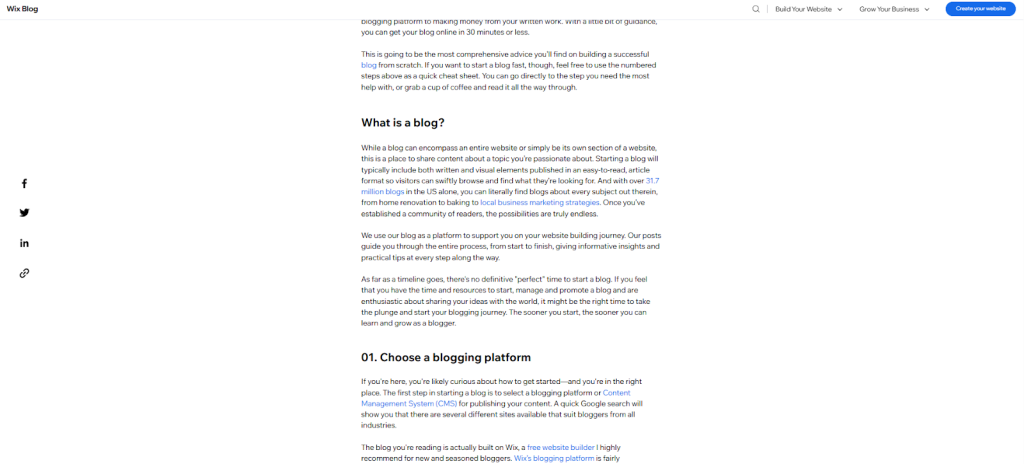
For example, Wix’s blog post, “How to Start a Blog in 10 Steps: A Beginner’s Guide,” provides an actionable roadmap for first-time bloggers while subtly positioning Wix as the go-to platform to make it happen.
Now, let’s be honest, if faced with a choice, would you rather:
- See and use a product before buying it, or
- Sit through a long sales process to find out if it’s the right fit?
If you’re like most modern buyers, you’d pick the first option. In fact, as nShift notes, you would be in the 40% of consumers who prefer to “try before they buy” when shopping online. And that’s precisely why product-led content consistently outperforms sales-led content.
The new SaaS growth flywheel
Here’s what the traditional funnel used to look like:
Awareness → Consideration → Trial → Conversion.
But in 2025, that line has blurred. Product-led content (PLC) has modified the journey into a more fluid loop:
Content (where readers discover real use cases) → Product Experience (where they see results firsthand) → Conversion.
So, every time a user interacts with your blog, guide, course, tutorial, or use case, they’re experiencing your product’s value in action.
And here’s the icing on the cake. The PLC approach naturally unites your marketing, product, and growth teams.
Instead of working in silos (with marketers telling stories and product teams building features), everyone now collaborates around one central question:
“How can our content deliver a real taste of product value?”
How SaaS companies scale with product-led content in 2026
When I was deciding where to host my writing portfolio, all it took was one X (formerly Twitter) post.
A user shared how they built their portfolio with Lovable AI, detailing the process step-by-step. Through that post, I experienced the product (its simplicity, speed, and outcome) without ever visiting Lovable’s homepage.
I was instantly sold. Today, my writing portfolio lives on Lovable AI and I never once interacted with their traditional marketing content.
That’s the power of product-led content (PLC) in action. And here’s how three of the top SaaS companies are flexing this superpower.
Ahrefs
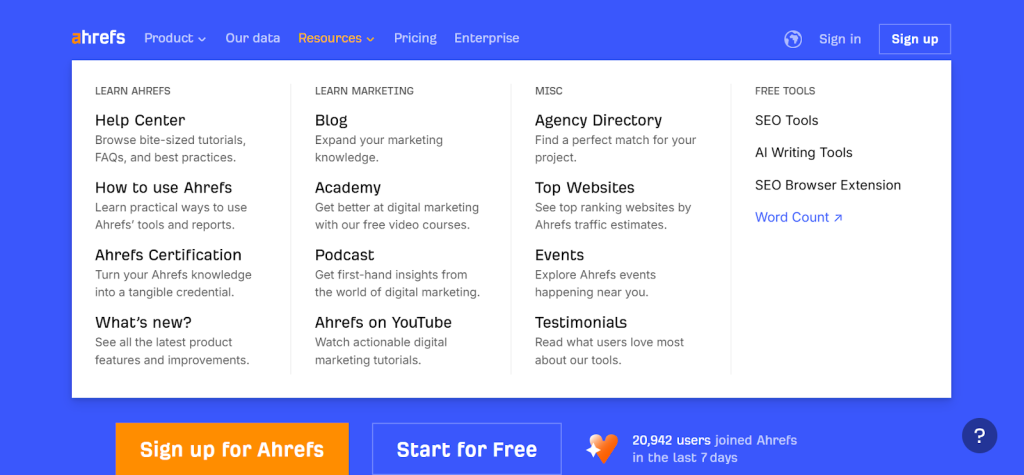
Ahrefs is one of the best examples of a SaaS brand that has fully embraced product-led content. They were quick to define their ICP as marketers and SEO professionals who crave practical knowledge and hands-on expertise.
Instead of pushing sales pages to readers, Ahrefs built an ecosystem of educational experiences around their product. Their blog posts and videos immersed users in real workflows powered by Ahrefs tools.
Ahrefs’ PLC strategy
- Authority: Ahrefs has consistently churned out valuable content for years. Enough to solidify its position as an authority and trustworthy leader in SEO. This credibility keeps the audience loyal to their tools and products.
- Free Resources: Ahrefs offers a diverse library of free resources (product demos, webinars, tutorials, templates, etc.). These resources help undecided buyers experience value upfront. It often leads them to conclude that Ahrefs is the best fit, even before a sales conversation happens..
- Community: Ahrefs has also cultivated a thriving online community that’s kept alive through high-quality educational content.
HubSpot
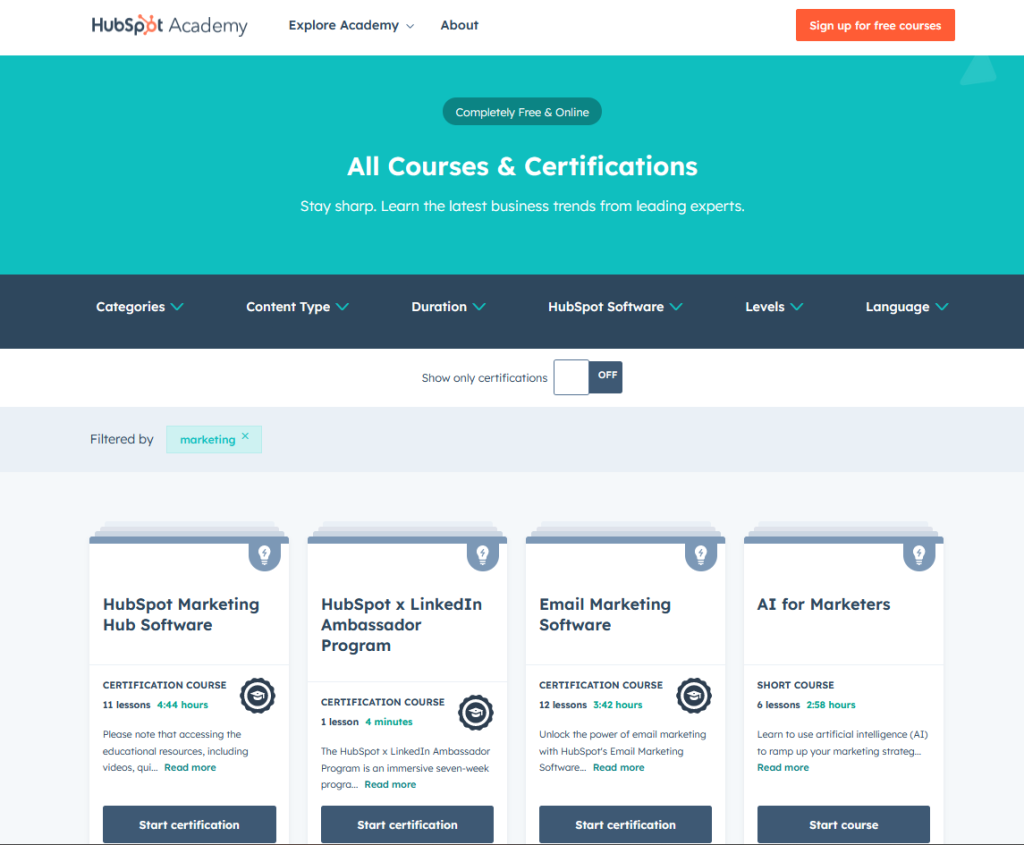
HubSpot dominates the inbound marketing space through their massive resources hub, which offers marketers and SEOs a wealth of educational materials, tools, and courses. When professionals need insights or trends, they instinctively turn to HubSpot.
How hard do you think it is to convince that audience to subscribe, eh? Not very, because HubSpot already owns their trust long before a sales page ever loads.
Hubspot’s PLC strategy
- Educational Content: HubSpot offers loads of free courses and certifications that equip marketers with the expertise to succeed in their respective niches. This in turn keeps the audience loyal, while promoting their suite of tools as the natural next step.
- Free Resources: From templates and tools to case studies and guides, HubSpot’s catalogue of free resources meets marketers exactly where they are. Each interaction provides value first, which creates a frictionless path to product adoption.
- Thought Leadership: For years, HubSpot has been synonymous with inbound marketing. They don’t bore the audience with their products, but rather focus on delivering quality content that addresses user pain points and builds authority around their product.
Hotjar
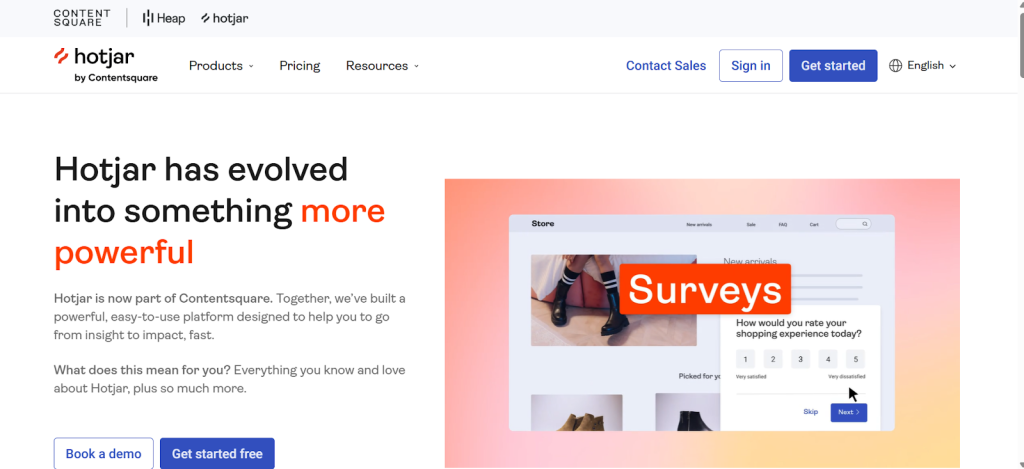
Hotjar takes a page from Ahrefs’ playbook for their blogs and resources. According to Dr. Fiona, former Senior Editor at Hotjar, the team saw how widely successful Ahref’s model worked and adapted its model while she led their content strategy.
Hotjar’s PLC strategy
- Product-focused Content: Each blog post or resource is built around the product’s real-world use. Readers learn by seeing how Hotjar solves a problem
- Product Showcase: The marketing team creates consistent content that showcases Hotjar’s features in action. It plants the seed of credibility and allows the reader to see why it is the perfect fit for them.
- Dual-purpose Content: Hotjar’s content serves both acquisition and retention goals. New users discover what’s possible with the tool, while existing users uncover new use cases and deepen their engagement..
Wrapping up
The rise of product-led content is a redefinition of how we build trust in SaaS.
Buyers no longer need to be convinced with clever copy or gated PDFs. And the smartest SaaS brands like Ahrefs, HubSpot, Atlassian, and Hotjar understand this.
When your content shows what your product can do, every blog post, tutorial, or demo becomes a sales engine on its own.
Frequently asked questions (FAQs)
What is product-led content in SaaS?
Product-led content integrates the product into educational or problem-solving content that allows users to experience its value firsthand before purchasing.
What is an example of PLC in SaaS marketing?
Ahrefs’ blog tutorials show readers how to solve SEO problems using Ahrefs tools. It teaches while subtly demonstrating product value.
How is product-led content (PLC) related to SaaS?
PLC helps SaaS companies drive adoption and trust by letting users experience the product through content instead of relying solely on persuasion.
What is the difference between product-led content (PLC) and sales-led content (SLC)?
PLC shows value through real use cases, while SLC tells users why a product is great, usually through direct promotion or persuasion.
How to become a product-led SaaS company?
Offer hands-on product experiences, align marketing with product education, and create content that demonstrates real user outcomes and value.