


Every day, an estimated 7+ million blog posts hit the internet. Seven… Million…
If each post were a person, you’d repopulate the entire city of London, every single day.
And in the AI era, most of them sound painfully alike. Same angles, same takes, same “em—dashed” energy. You would think the advent of AI writing meant content teams could finally doze off behind the wheel.
But nope, if anything, AI has turned the internet into a conveyor belt of mass-produced content… which makes businesses ask their marketing teams questions like, “Why can’t we publish 20 blogs before lunch?”
Suddenly, every SaaS brand wants to play HubSpot, Ahrefs, or Buffer, yunno, the ones shipping high-quality content at ridiculous scale. But they never ask:
Can we publish fast and still maintain HubSpot-level depth?
Or does increasing our content velocity slowly drain our quality, originality, and credibility?
Well, this article breaks down that tension.
Yes, publishing fast can make a lot of sense. But publishing slowly might make even more sense?
We’ll explore the real trade-offs between content velocity and quality, and of course, how smart SaaS teams find the razor-thin sweet spot between both.
Content velocity vs. content quality
Content velocity is simply how fast your team can produce and publish content. Be it blogs, guides, product pages, docs, videos, feature launches, all of it. How many meaningful content “releases” can you ship per week or per month without breaking something?
In SaaS terms, it is:
- How many “experiments” can you run in a quarter
- How quickly can you populate a category you want to dominate
- How rapidly can you respond to competitors, trends, and product updates
Meanwhile, content quality is how valuable, accurate, insightful, and usable your content is (not to you, but to your users). It is measured by how well it actually helps your audience do something.
The Content Marketing Institute defines high-quality content as “accurate, relevant, audience-focused information that solves problems and drives desired actions.”

When content velocity asks: “How fast can we publish?”
Content quality asks: “Should this even be published?”
Both are important for brand growth. But when one grows too fast, the other feels the strain. And that’s the challenge SaaS teams face in 2026.
According to LeadOrigin, you should prioritise velocity when:
- Your market moves fast, and timeliness directly shapes relevance (think finance, tech updates, breaking news).
- You need to rapidly build a topical cluster and establish search presence before competitors do.
- Your rival brands are expanding coverage faster, and you must close the gap or outpace them.
While you prioritise quality when:
- When trust, accuracy, and expertise determine whether your audience believes you, especially in fields like healthcare, legal, or B2B services.
- You’re creating long-life, cornerstone content meant to stay relevant and valuable for years.
- Your goal is to earn backlinks, citations, and industry-wide credibility.
What happens when you publish too fast… or too slow?
To be (fast)
Speed feels good until it doesn’t, especially at scale. When you publish fast, it creates invisible cracks that may show up months later in your SEO rankings and trust. Here are the real consequences:
1. Quality drops faster than you think (and Google notices)
A 2025 Orbit Media study revealed that high-performing blog posts now average 1,500–2,000+ words (AKA long-form blogs) with deeper research and better structure.
But when you’re publishing too quickly, you tend to get content that technically exists but doesn’t compete. That’s because you’ll likely skip original research, avoid expert interviews, and only recycle angles rather than create new ones
Google’s Quality Raters Guidelines also reinforce this because “thin or unoriginal content is one of the top reasons pages fail to rank.”
2. Your team burns out
The Content Marketing Institute found that 57% of marketing teams report burnout due to unrealistic content demands.
Imagine a team where:
- Writers have no time for research
- Editors become bottlenecks
- Designers get overloaded
Of course, the whole team subconsciously becomes reactive to tasks rather than intentional.
3. Your content becomes replaceable
When businesses want to post more content, they don’t hire more hands for the marketing team. They purchase the latest AI model and hope it does the magic. But their “super fast” content ends up sounding like everyone else creating content “super fast.” Your brand voice starts sounding off, creating an inconsistent tone, messaging, and depth.
According to Botco.ai’s State of GenAI Chatbots in Marketing report, almost 73% of marketers report that their companies use generative AI to generate text, videos, images, and other types of content, while more than two-thirds of them use it for brainstorming. This lack of originality is why most brands struggle to stay afloat as competition tightens on the SERPs.
Or not to be (fast)?
In her piece “Slow Your Content Marketing Down,” Sarah Greesonbach argues that producing fewer, better-crafted pieces leads to stronger long-term ROI.
And she’s right… but only half-right.
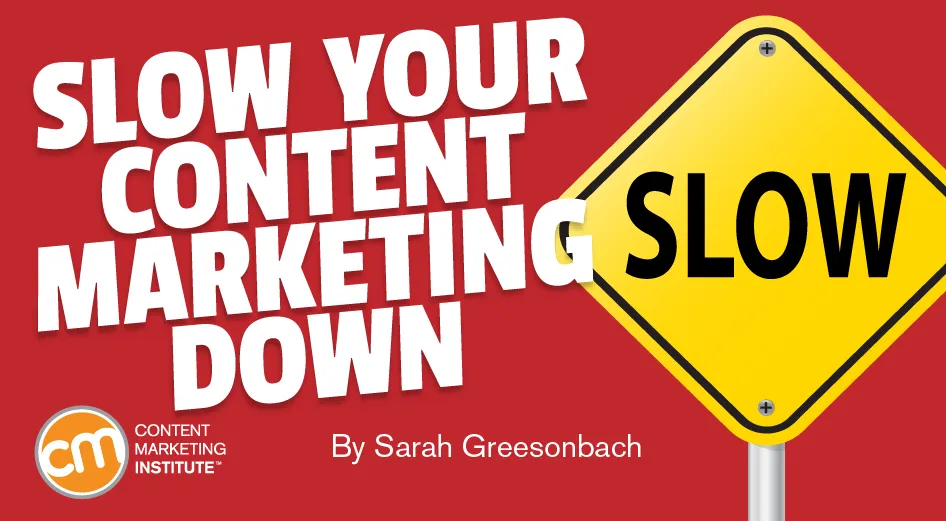
Slow content works if your brand already has strong authority or if you publish high-quality evergreen pieces and invest heavily in research and distribution.
Here’s what happens when you go too slow:
1. You lose topical authority momentum
Truth is, brands that consistently publish quality content earn search engine trust faster.
An inbound marketing study found that companies publishing 11+ posts per month earned 3X more organic traffic than those publishing fewer than four.
2. You miss real-time opportunities
Timing is a growth lever. It’s truer in the SaaS industry because if a SaaS brand publishes too slowly, they miss out on:
- Industry trends
- Feature–related content spikes
- Seasonal demand
- Competitor comparison opportunities
They become the brand that always shows up late to the conversation with incredible insights (that nobody sees).
How smart SaaS teams find the sweet spot (and you should too)
Imagine driving a bus with your entire marketing team inside.
- Drive too fast, and you reach your destination quickly… or you crash the whole team from the pressure and burnout.
- Drive at a comfortable speed, and you get there safely. Maybe a little late, but intact.
- Drive too slow, and you never reach your destination on time while competitors overtake you.
Which lane would you choose? Reckless speed or overly cautious slowness?
Neither, really.
Because you should know exactly when to hit the gas and when to slow down. Your content velocity should not be dictated by panic, competitors, or executive pressure.

Finding that balance (your brand’s “optimal speed”) is what separates efficient SaaS teams from burned-out ones. And here’s how to get started:
1. Set a minimum quality bar
Why: A shared standard/brief prevents anyone from churning out mediocrity and preserves the brand voice.
How to implement:
- Create a one-page Quality Checklist that every piece must pass before publishing, e.g., originality check, data/source links, product screenshots or examples, CTA tied to a measurable outcome, and readability score (e.g., 8–12 grade).
- Assign a Quality Owner (senior editor or product marketer) who signs off on exceptions.
- Define hard blockers, e.g., no published post without a real use case or live screenshot.
- Track the percentage of pieces requiring rework, reader satisfaction (survey/NPS on content).
2. Create “content blocks”
Why: Blocks let you assemble high-quality content quickly without having to rewrite everything from scratch.
How to implement:
- Build a library of reusable modules with intro templates, problem statements, proof sections (data + screenshot slots), step-by-step walkthrough shells, and call-to-action templates.
- Make each module a mini-asset: a screenshot pattern with caption, a templated chart, a short quote slot for SMEs.
- Use content blocks in your CMS so writers can drag-and-drop the structure.
- Keep blocks small and focused so mixing and matching stays seamless.
3. Tier your content
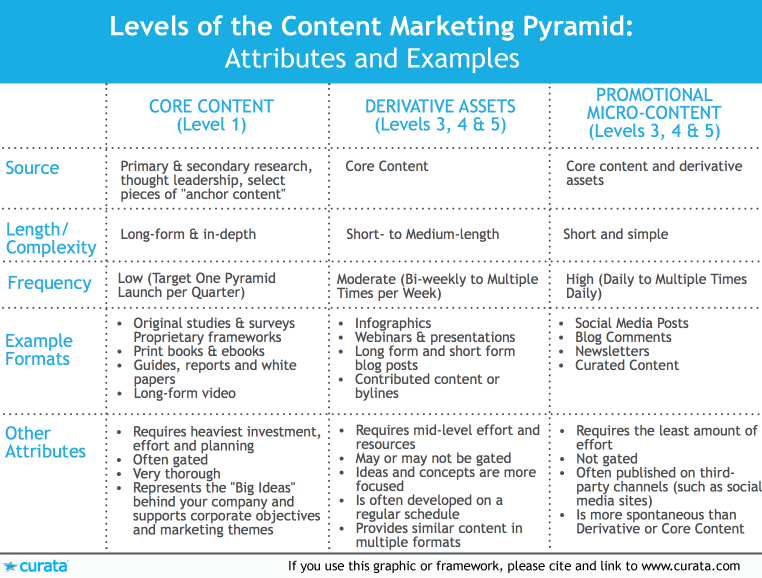
Why: Not every piece needs to be a thesis or in-depth guide. Tiering helps define the type of content and quality expectations.
Examples of SaaS content tiers are:
- Hero/Anchor (High Value, Low Frequency): Cornerstone guides, original research, product teardowns.
- News & Fast Updates (High Velocity, Medium Value): Release notes, feature announcements, competitor comparisons.
- Micro Experiments (Low Cost, High Learn): Short opinion pieces, A/B headline tests, social threads, quick videos.
To keep things tidy, create a calendar with colored tiers and allocate team capacity per quarter (e.g., 60% hero, 30% fast, 10% experiments).
4. Build content around product use cases
Why: Product-led content shortens the buyer’s journey by demonstrating the value.
How to implement:
- Map your top 8 user “aha” moments (activation triggers) to content opportunities. Example: “How to onboard a team in under 10 minutes.” Walkthrough with screenshots + template.
- Convert product workflows into step-by-step tutorials that include downloadable templates or in-app tours.
- Collaborate with Customer Success for real case studies and anonymised data.
- Track the activation rate of users who land on product-led articles.
5. Reduce unnecessary tiers
Why: Variety without purpose costs time and dilutes results.
How to implement:
- Audit past 12 months of content and rank content tiers by ROI (traffic, engagement, conversion).
- Drop or deprioritise low-ROI formats to focus more on 3-4 formats that result in business outcomes (e.g., long-form guides, tutorials, templates, short videos).
- Create a playbook for each format such that each one has a purpose, audience, production time, and distribution plan.
What high-performing SaaS teams do differently (that everyone else overlooks)
So far, we’re clear on what constitutes quality content and what it means to publish too fast. Now, let’s explore how high-performing content teams operate like a well-oiled growth machine. The secret to how they balance content velocity with content quality in ways most teams miss.
1. They build a “content stack”
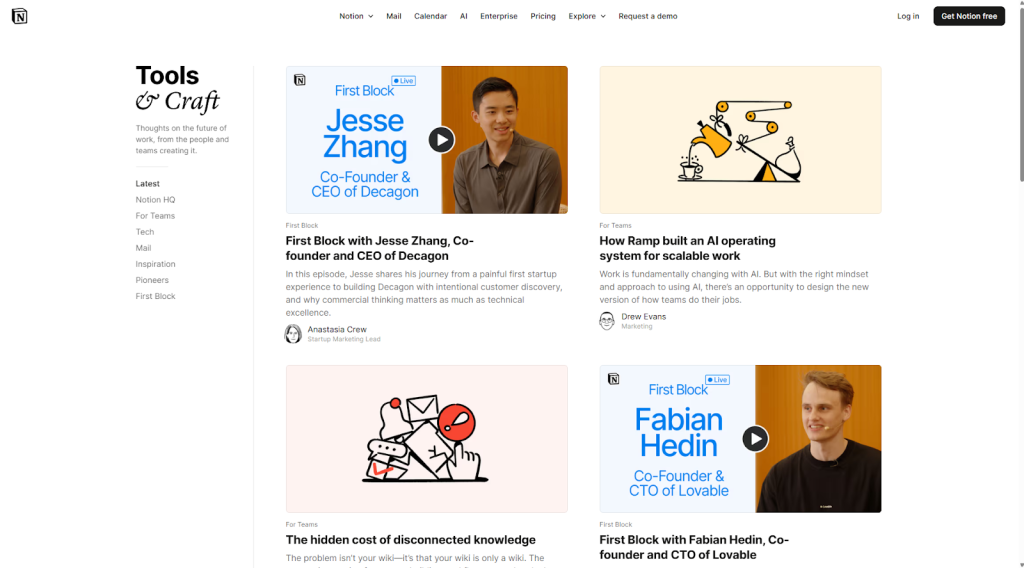
Top SaaS teams like Notion and HubSpot treat content like a layered product stack, which is good for SEO and building trust. They use templates, tutorials, community contributions, and guides that all interact to create a cohesive ecosystem.
For instance, Notion’s “Content Velocity Stack” is made up of deep tutorials, reusable templates, and user-generated content. Each asset serves the dual purposes of educating and activating its users.
2. They measure outcomes, not output
Many teams celebrate hitting 20 blog posts/month, oblivious to whether anyone reads or converts. But high-performing teams keep track of impact metrics for every content they put out. They obsess over the number of user activations driven by their content or organic traffic growth per tier.
3. They build feedback loops between teams
Marketing, Product, Customer Success, and Data teams don’t work in silos. Insights from CS inform the content topics. Any product changes or new features will birth the next tutorial content.
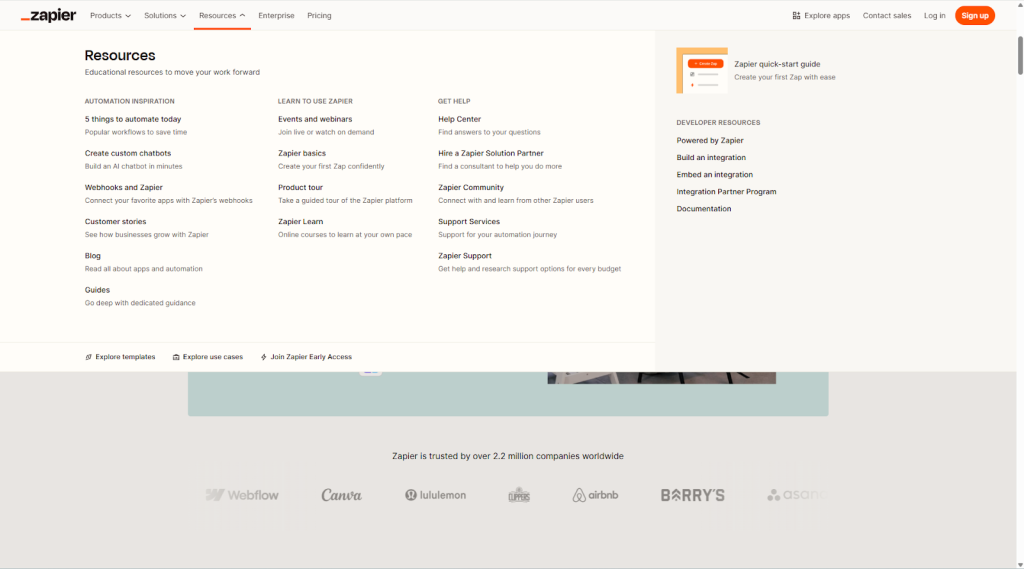
For example, SaaS teams like Zapier run quarterly content sprints in collaboration with Product and CS, which means new features get immediate, high-quality, product-led content.
4. They embrace intentional slow-downs
Counterintuitive as it sounds, high-performing teams also know when to hit pause. It could be for the next hero content that demands deep research or during major product launches that require tutorial-heavy content. It could also be to audit past content and refresh evergreen posts.
The Content Marketing Institute’s “Slow Your Content Marketing Down” approach echoes this less-is-sometimes-more idea.
What the best SaaS content will look like in 2026
In 2026 and beyond, SaaS content marketing, especially B2B SaaS, will be dominated by whoever publishes what feels the closest to the product experience itself, not whoever publishes the most.
The best content will read more like a guided simulation of using the product. It will merge storytelling, UX thinking, product onboarding, and data-driven proof into a single, fluid narrative that answers the buyer’s real question: “Will this work for someone like me, right now?”
The winners will be the SaaS brands that create experience-first content. These teams will prioritise content clarity, depth, and usefulness over buzzwords and volume.
Best SaaS folks will produce fewer pieces, but each piece will be a trusted engine for their ideal user by shortening their onboarding time, driving product activation, ranking for high-intent keywords, and becoming a permanent asset in the company’s growth loop.
Frequently asked questions (FAQs)
What does content velocity mean?
Content velocity is the speed and frequency at which a team produces and publishes content.
How do you measure content quality?
Content quality is measured by accuracy, depth, clarity, engagement metrics, SEO performance, conversions, and alignment with audience intent.
What are the three key characteristics of quality content?
High-quality content is: useful (solves real problems), credible (fact-checked, authoritative), and engaging (clear, structured, and reader-focused).
How do I check my content quality?
Check quality by reviewing clarity, accuracy, depth, relevance, readability scores, SEO optimisation, engagement metrics, and peer/editorial feedback. You can also consider benchmarking against industry-leading content.
How can content velocity impact SEO rankings?
High content velocity can boost SEO visibility by increasing indexable pages and topical coverage, but poor-quality rapid publishing may harm rankings due to thin or duplicate content.
Is it possible to maintain quality when accelerating content production?
Yes, teams can maintain high-quality content at scale with modular content workflows, templates, editorial checklists, SME collaboration, and prioritising outcome over output.
What tools help in tracking content velocity?
Content velocity can be tracked using Google Analytics, Trello, Asana, Notion, Airtable, or analytics dashboards that measure publication frequency, content throughput, and team capacity versus output.