


Even though content marketing is as old as the internet, 97% of marketers still use it as part of their marketing strategy.
That’s why you see B2B SaaS companies achieving exceptional growth through SEO, founder-led thought leadership, or a strong content engine that quietly drives inbound leads month after month.
However, it’s hard for you to relate.
Because after 30 articles in a month with no visible impact on revenue — your content strategy is becoming hard to defend. So you ask yourself:
“What am I doing wrong?”
This article breaks down the top 5 content marketing mistakes B2B founders make, why they happen, what actually works instead, and how we do it at h1copy.
1. Creating content without revenue intent
When a customer searches for “best content scheduling tools,” they’re not asking what a content scheduler is — they’re trying to choose one. You can tell this from the results on the search page.
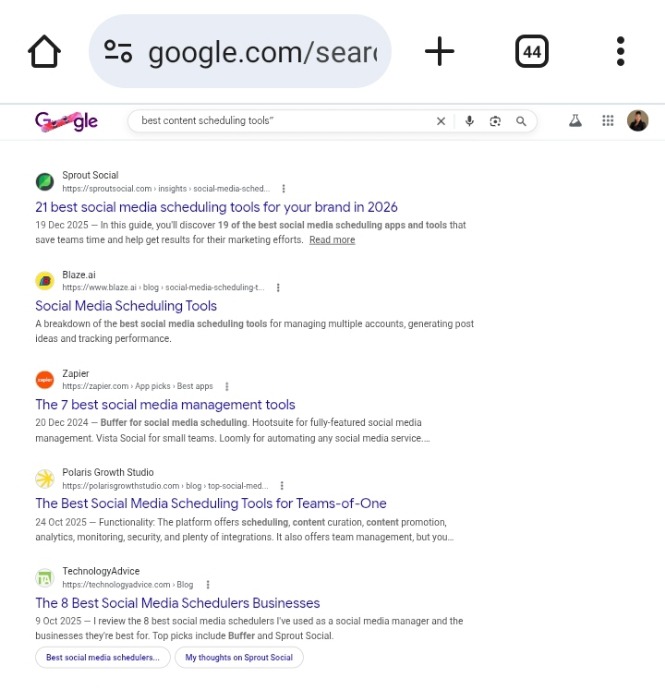
What you’ll most likely see are listicles, comparison pages, and review snippets — all signals of commercial (buying) intent rather than informational intent, because the audience already knows what they’re looking for.
However, most B2B founders have detached revenue from content because they believe “it makes them sound salesy.” So, content for them looks like this:
- Educational blog posts with straight definitions and no next step
- Generic articles that attract readers who will never buy
- Content teams celebrating traffic, with no focus on real business impact
One effect this has is that it creates a gap between your content and readers who are ready to buy. It brings in visitors but never converts them into revenue because it was never created with revenue intent in mind.
This mistake also shows up in your strategy when it focuses only on “brand awareness” instead of addressing the entire customer journey. So if your content doesn’t generate or contribute to revenue, it’s simply words without a revenue-driven design.
What works instead
In our latest content strategy for a client at h1copy, we built content to meet every stage of the buyer’s journey — not just awareness.
The goal was not to fill a content calendar with topics. It was to create content that carries readers through: awareness → consideration → buying stage.
What it looked like for our client
- Educational content that subtly prepares readers for a solution
- BOFU content that answers evaluation-stage questions
- Internal links that guide readers toward product pages, use cases, or demos
Content is a big B2B asset. So we create content where every page has a job: some build awareness, others build trust, others create product clarity, and the BOFU pieces close the loop.
2. Treating SEO as keywords, not a system
The old mistake of treating SEO like a vending machine where you insert keywords and rankings fall out is dead.
This is still one of the biggest mistakes B2B founders make: they find keywords, write blog posts, publish consistently, and expect Google to reward the effort. That approach used to work better years ago when ranking was mostly about matching search terms but not anymore.
Today, SEO rewards depth, cohesion, and topical authority. It is no longer a single entity but an ecosystem with different pieces supporting each other.
For instance:
When you search for “SEO” in Ahrefs’ blog section, you’ll find dozens of articles covering different angles of the same topic. And when you search for “SEO” on Google, chances are one of those articles shows up.
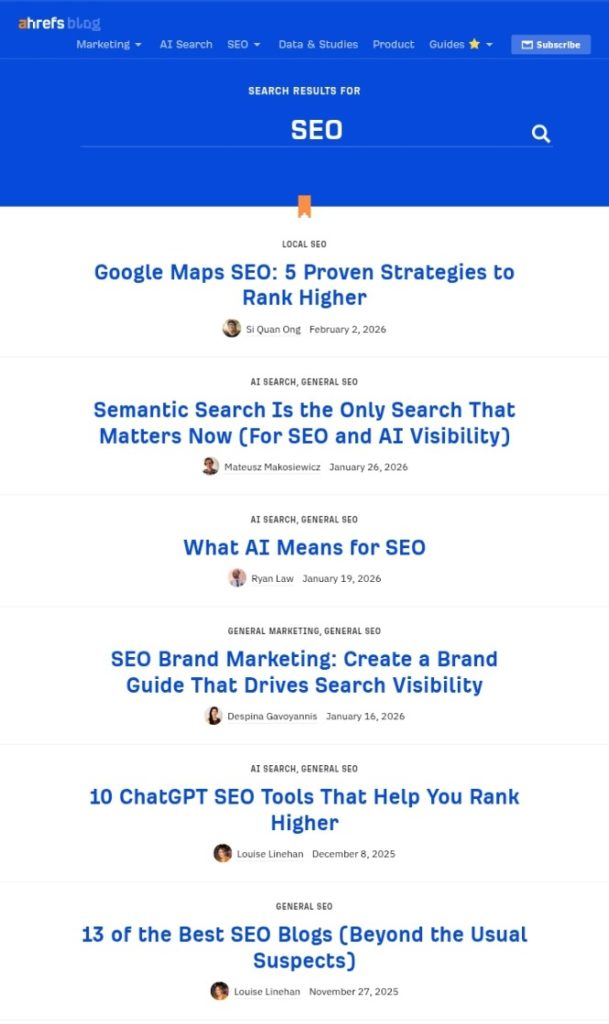
This is because SEO is now a system, not just a single channel. With the rise of LLMs (Large Language Models) and GEO (Generative Engine Optimization), the stakes are even higher. These systems rank content by pulling information from sources they trust, then summarizing and citing those sources.
This is where most B2B content fails — it’s written like isolated posts: no system, no structure, no authority. SEO is no longer just about Google. It’s about building credibility. The goal isn’t only to show up on page one, but to become a source that gets repeated and cited by AI systems like ChatGPT, Perplexity, or Gemini.
Also read: How AI Broke Writing — And What Comes Next
What works instead
Building content like an ecosystem.
At h1copy, we create topic clusters and supporting pages that reinforce one another. So, instead of writing one blog post on product-led growth and moving on, we built a structured set of content around activation metrics, onboarding flows, PQLs, retention strategies, and real-world examples.
Then these connect those articles to product pages, use cases, and comparison pages so the journey is clear for both readers and search engines.
For GEO, we create content that is:
- Easy to extract
- Easy to trust
- Hard to misinterpret
In the AI search era, visibility isn’t just about ranking. It’s about becoming a reference point.
3. Writing for everyone instead of your buyer
A point to note: In B2B, buying decisions are not made by companies.
They’re made by individuals: specific people with responsibilities, pressures, and success metrics. So, your content should be written to influence a decision-maker.
However, B2B founders still make the mistake of wasting marketing budgets by writing content that speaks to everyone. Often because they worry that specificity will reduce reach. So they broaden the message and unintentionally dilute it. In B2B, broad content isn’t inclusive. It’s invisible.
What works instead:
Writing for a specific audience makes it easier to influence decision-makers because they can see themselves in your content.
For example, an article with a topic: “How SaaS Engineering Managers Can Reduce Client Drop-Off With Better API Error Handling Workflows” is not written for everyone but a particular set of audience.
Certain criteria make this content specific enough to influence a decision maker.
| Criteria | Example | What makes it specific |
| Industry/context | SaaS | It defines the business type |
| Specific audience | Engineering managers | Targets one role |
| Clear goal | Reduce client drop off | Focuses on one measurable result |
| Specific problem area | API error handling | Solves a clear technical issue |
| Solution | Workflows | It shows it’s actionable |
The effect of your content will be diluted if it is written to answer every possible business question instead of addressing one specific pain, role, or decision process. Pieces that choose a specific buyer persona and speak in terms that the buyer already thinks, talks, and evaluates in are the most effective
That recognition is what builds trust.
4. Separating content from the product
Separating content from your product means creating content that educates the reader but never leads them back to your product as part of the solution. It’s like giving someone a detailed map and disappearing when they ask where your office is.
This mistake gets you traffic. But after reading, customers leave to find the solution elsewhere because your content never tied itself back to your product.
The hard part is that you don’t notice the margin loss until much later — after lost leads and sales — when you realize your content created awareness but not demand.
Today, buyers don’t want abstract advice; they expect product context. They want to see how a solution supports the process in real time.
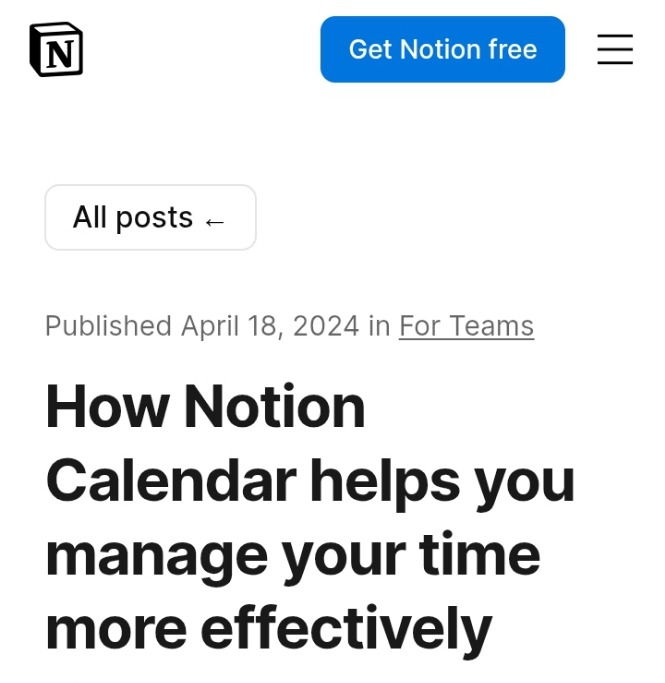
For example, this article shows how you can use Notion to manage your time effectively. It teaches time management through Notion itself. So, instead of giving generic advice, the article shows how to plan, track tasks, and stay organized using Notion templates and features, making the product feel like the natural solution.
Your customers want clarity on workflow, decision criteria, tradeoffs, and outcomes. If your teams remove product context, it becomes a generic piece you can find anywhere.
As a product-led content agency, we connect education and conversion. This doesn’t mean being aggressive or pushy. It means weaving real workflows, case studies, and examples showing how the product supports outcomes in different product-led content types.
It means showing:
- how real users solve problems
- where tools fit into workflows
- why certain approaches scale better with the right system
Educational content should reduce friction, not hide the solution because B2B buyers don’t just want theory. They want application.
5. Measuring success by traffic alone
Reportz.io released an article, key metrics to track in content marketing, which states that success in SaaS looks like traffic, demo requests, trials, qualified leads, and sales conversions.
But, B2B founders often make the mistake of measuring success by page views or impressions alone, which is dangerous because traffic can look impressive but do nothing for revenue. You could be ranking and attracting large audiences, but they might be the wrong audience.
Traffic is only the beginning of the conversion process. A content’s real job is to attract the right audience and move them closer to a buying decision. When success is measured only by visits, teams end up prioritizing topics that are easy to rank for but don’t influence revenue.
What works instead:
Measure demo assists, trial signups, conversions, sales enablement usage, and how content shortens the buyer’s journey.
Teams track not just traffic, but conversion paths, assisted conversions, and alignment between sales questions and published content. When content mirrors real buying conversations, attribution becomes clearer even if the journey isn’t linear.
Why these mistakes persist
None of these issues comes from poor writing.
They come from content being treated as output instead of a growth process. Most founders are not struggling because their writers are mediocre or their product is weak.
They’re struggling because their content isn’t designed to do what B2B content is supposed to do which is to influence decisions. It should build trust before the sales call, answer objections before the demo, and create clarity before the buyer ever speaks to your team.
But when content is treated like a routine activity — “post 3 blogs a week, post on LinkedIn daily, increase traffic”, it becomes noise. It may look productive, but it doesn’t move the pipeline.
This is because: B2B buyers are not impulse buyers.
They’re making a decision that affects their KPIs, their budget, their performance, and sometimes their reputation at work. That means they need more than good writing. They need reassurance, evidence, and confidence.
That’s why content only performs when it is built with intention, structure, and revenue in mind.
Content should be:
- Intent-led: it matches what the buyer is looking for at that stage
- Systemized: should be a connected ecosystem with each piece supporting the other
- Buyer-specific: speak directly to the decision maker
- Product-aware: educative with product context
- Revenue-conscious: measured by outcome
When content is built this way, it performs, not just in rankings but in revenue.
Final notes
Content marketing is not failing B2B founders but it has evolved.
In 2026, B2B content needs to be systematic and tied to business outcomes, not just impressions.
If traffic is your only metric, then content will always feel like a gamble.
But when you design content that moves buyers forward — from curiosity to clarity to confidence — then content stops being a cost and becomes an asset that compounds.
That’s what modern content done right looks like.
Done with intention. Done with purpose. Done with impact.
h1copy exists for that exact reason: to help B2B companies build content that doesn’t just rank on Google, but also performs in the era of AI search through GEO — content that attracts the right buyers and moves them toward a decision.
FAQs (frequently asked questions)
What are the most common B2B content marketing mistakes?
Founders often ignore revenue intent, treat SEO as keyword stuffing, write generically, separate content from product context, and measure only traffic — leading to high views but zero pipeline impact.
How can B2B SaaS founders fix poor content conversion rates?
Map content to the buyer journey (awareness to BOFU), add clear CTAs like demos/trials, and track assisted conversions instead of vanity metrics for revenue-aligned results.
Is SEO still effective for B2B content in 2026?
Yes, but focus on topical authority via clusters, internal linking, and GEO-optimized depth that AI engines cite — beyond isolated keyword posts.
What is Generative Engine Optimization (GEO) for B2B?
GEO tailors content for AI summaries (e.g., ChatGPT/Perplexity) by making it extractable, trustworthy, and structured — key for B2B visibility as search evolves.
How do I create buyer-specific content for B2B SaaS?
Target roles (e.g., “SaaS Engineering Managers Reducing Drop-Off”) with industry context, pain points, and metrics — use personas for precision over broad appeals.
Why does my B2B content get traffic but no leads?
It likely lacks product integration, buyer-stage alignment, or strong CTAs—traffic without conversion paths builds awareness but not demand.
What key metrics should B2B founders track for content success?
Beyond traffic, monitor demo assists, trial sign-ups, qualified leads, sales influence, and journey shortening — tie to revenue for true ROI.
How to build a content ecosystem for SaaS SEO?
Create topic clusters (e.g., pillar on PLG with supporting posts), link internally, and connect to product/use-case pages for authority and user flow.