

It’s 2026, and if you’re building a product that makes people’s work or lives easier, you no longer have the option to build silently, especially if you’re a startup.
According to LinkedIn, 4 out of 5 LinkedIn members drive business decisions. Meaning your future customers, investors, and partners are already on the platform, looking for someone they can trust with their money. And if that someone isn’t you, it’s definitely your competitors.
If you need realistic reasons to stay visible on LinkedIn as a B2B founder, we created this piece to show you why you need to be visible.
Who is a ghostwriter?
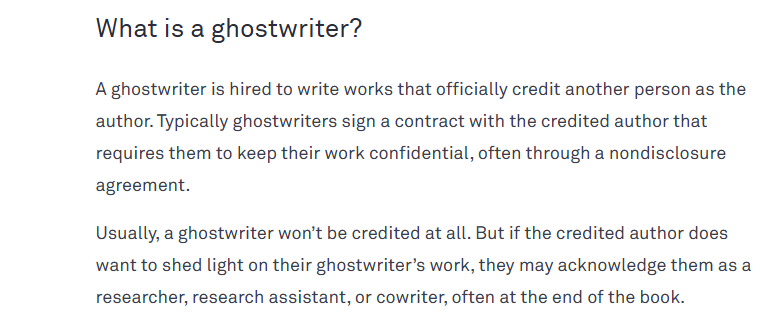
A ghostwriter is someone who writes content in your voice and tone, without taking any credit for it. As Grammarly puts it, a ghostwriter is “hired to write works that officially credit another person as the author.”
Think about it this way: as a B2B SaaS founder, your plate is already full. You’re pitching investors, closing deals, managing your team, and constantly improving your product. Writing LinkedIn posts is probably the last thing on your mind.
So when you hire someone to write your LinkedIn content, in your voice, with your opinions, under your name, that person is your LinkedIn ghostwriter. You get the visibility. They do the writing and get paid.
Why LinkedIn in 2026?
If you still think — why LinkedIn? Why not X, Facebook, or Instagram?
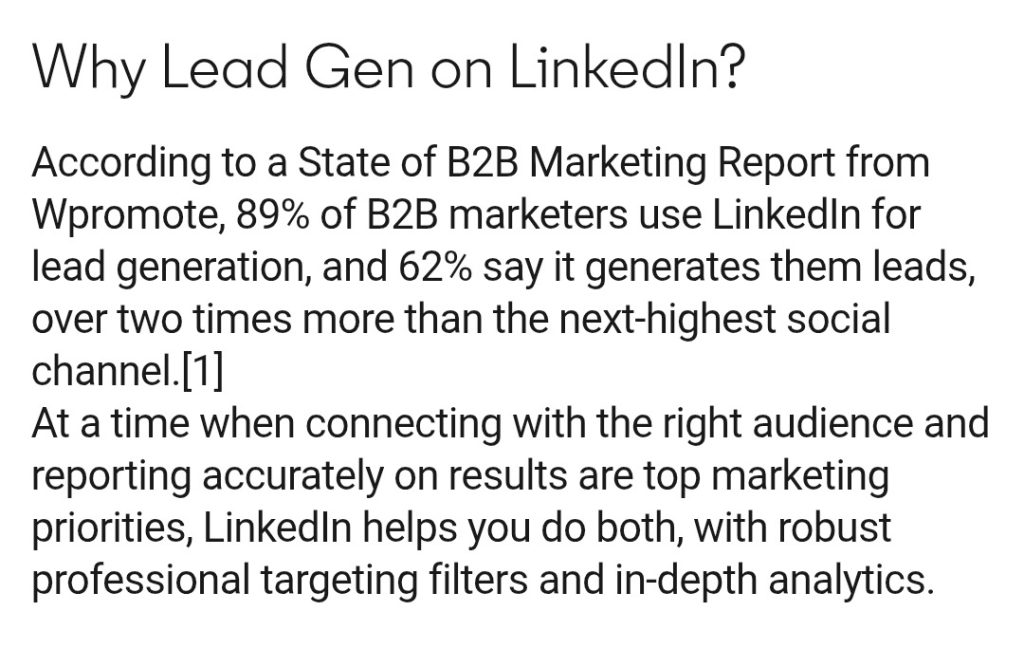
Good question. LinkedIn is the world’s largest professional network, 86% of B2B marketers use LinkedIn, making it the top social media platform for B2B marketing. More importantly, 82% of B2B success comes from LinkedIn. So far, this is a tangible reason why LinkedIn is the best option for you as a B2B founder, but there is more.
Organic reach remains significant, and LinkedIn consistently rewards high-quality, consistent content.
Profiles with creator mode turned on enjoy up to 35% more reach. That’s free visibility only if you’re actually showing up consistently.
Being active on LinkedIn as a founder builds the trust required to scale your product. People care about the story behind what you’re building — why you started, the challenges you’ve faced, and the ones you’re still navigating.
Your customers are human, not robots. Personal stories create connection, and connection builds trust. That trust ultimately drives growth — and these are stories you simply can’t tell from a company page.
The visibility gap costing B2B SaaS founders real deals
Your product alone won’t close deals in 2026. Buyers don’t just buy software anymore; they buy into the story behind it, the person building it, and the problem they’re obsessed with solving.
Think about the last SaaS tool you recommended or purchased. Chances are, you read a post by the founder or a team member talking about the problem they were solving long before you ever requested a demo.
You’d read their posts. You’d followed their journey. You felt like you already knew them, and that familiarity is what made saying yes so easy. That’s the power of visibility.
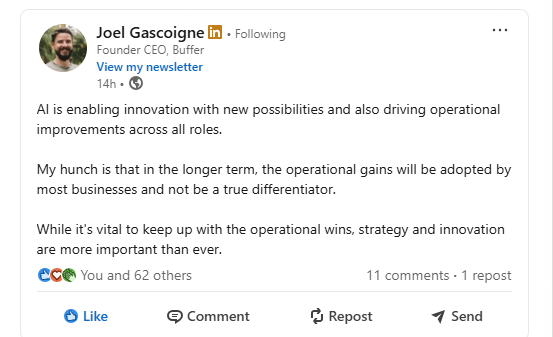
A great example is Buffer. The founder and team members post consistently on LinkedIn, sharing what they’re building, how they work, and the lessons they’re learning. They’re a fully remote team, yet they feel incredibly present and human to their audience. That consistency has built a level of trust that no ad campaign could replicate.
That’s exactly the energy you need as a B2B SaaS founder. You need to be blowing your own horn, not in a self-promotional way, but in a way that puts your expertise and your mission in front of the right people, consistently.
What LinkedIn ghostwriters do
In short, a LinkedIn ghostwriter helps you build your presence and authority on LinkedIn. And here’s what this looks like in practice:
1. Step one
They start by getting deep into your head, understanding your story, your opinions, your experience, more importantly, your industry, and the unique way you see the world.
2. Step two
They translate all of that into consistent, engaging posts that sound exactly like you. The goal is never to replace your voice; it’s to give your voice a platform.
Some LinkedIn ghostwriters will also build out your content calendar, identify the topics that will resonate most with your ideal customer profile (ICP), track what’s performing, and adjust the strategy accordingly.
While others work purely on the writing side, taking a brief or a voice note from you [the founder] and turning it into a polished post. The scope depends on what you need.
The most important thing is that a LinkedIn ghostwriter handles the writing for your personal page so you can stay focused on building the company.
Step three: What this can look like in practice
For example, an agency like h1copy, which specializes in B2B SaaS and tech, approaches LinkedIn ghostwriting as a strategic growth channel — not just a writing service.
Instead of simply delivering posts, the process may include:
- Deep founder interviews to extract insights, positioning, and unique perspectives
- Building a LinkedIn content calendar aligned with business and growth goals
- Writing posts that feel natural and authentic — not overly polished or “agency-written”
- Optimizing the founder’s LinkedIn profile for credibility and conversions
- Tracking engagement and adjusting content based on what performs
The focus is typically on outcomes — sustained visibility, meaningful engagement, inbound conversations, and long-term authority in a specific niche.
Check out LinkedIn ghostwriting pricing here.
Benefits of hiring a LinkedIn ghostwriter
B2B founders like Joel Gascoigne, Zeb Evans, and Dharmesh Shah consistently build their personal brands on LinkedIn — even while running successful companies. They understand that visibility drives trust, and trust drives growth.
But not every founder has the time to write and publish consistently. If bandwidth is your biggest constraint, here’s why hiring a LinkedIn ghostwriter in 2026 can be a smart move.
1. Consistency without the burnout.
Consistently showing up on LinkedIn is what builds trust over time. Disappearing for a month — and then returning seven months later — weakens that momentum and makes it harder to build credibility.
For busy founders, sitting down to write three times a week can feel stressful and time-consuming. A ghostwriter ensures you stay consistent — even during product launches, fundraising rounds, or periods of rapid team growth.
2. Your ideas are amplified
You have years of experience, strong opinions, and insights. A ghostwriter’s job is to pull those out of you and shape them into persuasive content. You’re not outsourcing your thinking; you’re outsourcing the execution to a professional.
3. Inbound pipeline
When you’re consistently visible and adding value on LinkedIn, your ideal customers come to you. Warm inbound leads from LinkedIn are some of the easiest to close because trust is already built before the first call.
4. Investor and talent attraction
Investors research founders before they agree to a meeting. Top talent evaluates leadership before submitting an application.
A strong LinkedIn presence builds credibility in advance — making both conversations easier before they even begin.
5. Free up founder bandwidth
As a founder, your time is one of your most valuable assets. If you’re spending 3–5 hours a week trying to figure out what to post and how to write it, you might miss out on other important things, but hiring a ghostwriter gives that time back to you.
Cost of hiring a LinkedIn ghostwriter
These factors determine the cost of hiring a ghostwriter.
1. Location
Where your ghostwriter is based has the single biggest impact on what you’ll pay. A ghostwriter in Europe and one in Asia may deliver the same quality of work, but their rates will look very different. This isn’t about one being better than the other; it’s simply a reflection of different economies and cost of living. However, remote work has made it possible to hire talented ghostwriters from anywhere in the world, so you’re not limited to your backyard.
2. Experience level
A ghostwriter who has been writing for six months will charge very differently from one who has spent years building LinkedIn audiences specifically for SaaS founders. Experience brings speed, strategic thinking, and a track record of results, and all of that costs more. Think of it like hiring a developer: a junior can get the job done, but a senior who has shipped products for companies like yours will save you time and costly mistakes.
3. Deadline and turnaround time
Most ghostwriters build their rates around a reasonable turnaround, usually 3–5 business days per piece. But if you need a week’s worth of posts turned around in 24 hours, that urgency will cost you more. Creating a content calendar in advance is the easiest way to avoid paying extra for speed.
These three factors: location, experience, and deadline, are what you should weigh before comparing quotes.
How to find the right LinkedIn ghostwriter
This is where it gets very interesting. I hear you because knowing what to look for saves you from wasting money on the wrong person.
Here’s what to look out for.
1. They are niche expert
A ghostwriter who specializes in B2B SaaS brings far more value than a generalist who writes about everything — from wedding blogs to tech articles to pet content. Niche expertise means they already understand your buyer, your language, and what actually performs in your market.
2. They have a strong portfolio, preferably with results
Before giving them an offer, ask to see samples of LinkedIn content they’ve written for other founders or executives. Best, ask if they can share engagement data or client testimonials. Good ghostwriters are proud of what they’ve built for others.
3. They interview before they write
The best ghostwriters don’t just take a topic and run with it; they get on a call with you, ask the right questions, and extract your ideas before a single word is written. If someone offers to write without understanding your perspective first, that’s a big red flag.
4. They understand your ICP
Your LinkedIn ghostwriter should be able to answer: “Who is your ideal customer? What problems keep them up at night? What does a great post for that specific person look like?” If they can’t answer those questions, they’re not the right fit.
What to do next as a B2B founder
If you’ve read this far, you already know that staying visible on LinkedIn in 2026 is no longer important; it is VERY important. And if you’re confused about what to do, start by being honest about your current LinkedIn presence. Are you posting consistently? Is your content attracting your ideal customers or meaningful conversations in the DMs? If the answer is no, the problem isn’t the platform; it’s how you show up.
Hiring a LinkedIn ghostwriter isn’t about being fake. Every major founder you admire who shows up consistently online has a team behind them. It’s about being strategic with your time and making sure your voice is heard, even when you’re deep in the building phase.
Your buyers are on LinkedIn right now. Your future investors are also on LinkedIn. The question is: when they search your name, what will they find?
Don’t let it be silent. If you need a ghostwriter with proven experience, you can reach out to agencies like h1copy to hire one.
Frequently asked questions (FAQs)
What does a LinkedIn ghostwriter for B2B SaaS founders actually do?
A LinkedIn ghostwriter dives into your story, voice, and industry insights, then crafts consistent, engaging posts under your name. They handle everything from content calendars and ICP-targeted topics to polishing your voice notes into high-performing content, freeing you to focus on product building.
How much does it cost to hire a LinkedIn ghostwriter in 2026?
Costs vary by location (e.g., lower in Asia vs. Europe), experience (junior vs. senior SaaS specialists), and deadlines (rush jobs add premiums). Expect $500–$5,000/month for 12–20 posts, with niche B2B experts charging more for proven results like inbound leads.
Why hire a LinkedIn ghostwriter for B2B SaaS instead of posting yourself?
As a busy founder, you gain consistency without burnout, amplified ideas, inbound pipelines, and time back for core work. Founders like Joel Gascoigne prove it scales trust — your audience connects with your story, not just your product.
How do LinkedIn ghostwriters capture my unique voice as a B2B founder?
Top ghostwriters start with interviews or voice notes to extract your opinions, experiences, and worldview. They mimic your tone precisely, ensuring posts feel authentic — like you wrote them — while optimizing for LinkedIn’s algorithm.
How to find the best LinkedIn ghostwriter for B2B SaaS in 2026?
Look for niche SaaS specialists with portfolios, engagement data, client testimonials, and ICP knowledge. Red flags: generalists or no pre-writing interviews. Check agencies like h1copy for proven track records.
Do I need LinkedIn Premium to benefit from a ghostwriter?
No, but it amplifies results — unlocking more reach, analytics, and scaling tools. Combine it with a ghostwriter’s consistent, quality content for maximum organic visibility in B2B marketing.
Can a LinkedIn ghostwriter help with my SaaS content calendar?
Yes, many build and manage calendars tailored to your ICP, tracking performance, and suggesting resonant topics. This ensures strategic posting that drives conversations and conversions without you micromanaging.
Is hiring a LinkedIn ghostwriter worth it for early-stage B2B SaaS startups?
Absolutely — 86% of B2B marketers use LinkedIn, and 82% of success stems from it. Start pre-launch to build trust, attract early users/investors, and outpace competitors who stay silent.
How does a LinkedIn ghostwriter boost SEO for B2B SaaS founders in 2026?
LinkedIn ghostwriters align posts with your SEO strategy, creating shareable content that generates backlinks and entity signals for Google. By focusing on ICP pain points and industry trends, they amplify your topical authority across search and social, driving inbound traffic to your site while building personal brand trust.